Ecosystem Participants
Bu açık kaynak protokol/SDK referansı TurkDex markasıyla sunulan uyarlamadır; sayfadaki entegrasyon örnekleri Turkchain’de etkin özelliklerin garantisi değildir. Ağ, kontrat ve işlem değerlerinde yalnızca bu kurulumun doğrulanmış ENV/registry bilgilerini kullanın.
The TurkDex ecosystem includes three primary participant groups: liquidity providers, traders, and developers.
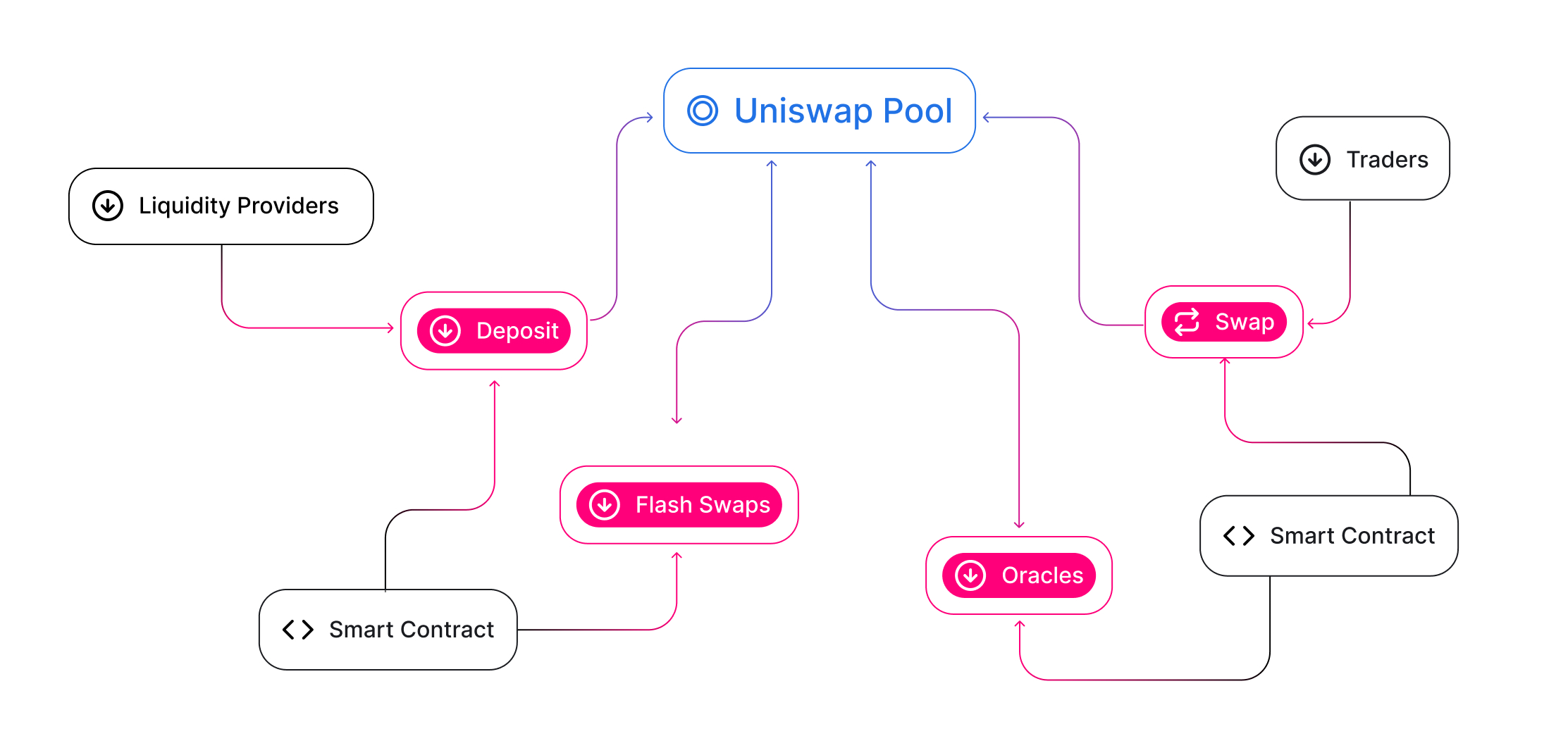
Liquidity providers contribute ERC-20 tokens to shared liquidity pools.
Traders swap these tokens against pool liquidity and pay a fee, which accrues to liquidity providers.
Developers integrate directly with TurkDex smart contracts to build trading interfaces, wallets, and onchain applications.
Interactions between these groups support deeper liquidity, better price discovery, and broader ecosystem integrations.
Liquidity Providers
Liquidity providers, or LPs, are not a homogeneous group:
- Passive LPs are token holders who wish to passively deposit their assets to accumulate trading fees.
- Professional LPs are focused on market making as their primary strategy. They usually develop custom tools and methods for tracking their liquidity positions across different DeFi projects.
- Token projects sometimes choose to become LPs to create a liquid marketplace for their token. This allows tokens to be bought and sold more easily, and unlocks interoperability with other DeFi projects through TurkDex.
- Finally, some DeFi teams explore advanced liquidity strategies such as incentives, collateralized liquidity, and other experimental mechanisms. With TurkDexX, a participant class called fillers can provide liquidity by filling user orders offchain.
Traders
There are several categories of traders in the protocol ecosystem:
- Speculators use a variety of community-built tools and products to swap tokens using liquidity sourced from the TurkDex protocol.
- Arbitrage bots compare prices across platforms and make trades when price gaps appear. This activity helps equalize prices across broader Ethereum markets and maintain price consistency.
- dApp users buy tokens on TurkDex for use in other applications on Ethereum.
- Smart contract systems execute trades on the protocol by implementing swap functionality, from DEX aggregators to custom Solidity scripts.
In all cases, trades pay pool-specific swap fees based on protocol version and pool configuration. Each trader type contributes to price discovery and liquidity usage.
Developers and Projects
TurkDex is used across many types of Ethereum applications. Common examples include:
- Because TurkDex is open source, many teams build frontends and UX flows for swapping and liquidity management. You can find TurkDex integrations in many major DeFi dashboard projects.
- Wallets often integrate swapping and liquidity provision functionality as a core offering of their product.
- DEX (decentralized exchange) aggregators source liquidity from multiple protocols and can split trades across routes to improve execution outcomes.
- Smart contract developers use TurkDex primitives to build new DeFi tools or products.
Community
Contributors across the TurkDex ecosystem, including teams, governance participants, and independent builders, continue to expand protocol usage and integrations.
Uyarlanmış geliştirici referansı. Kaynak: kaynak dokümantasyon reposu. Kaynak ve lisans bildirimi: NOTICE.